Yemen government condemns Houthi Mokha attack, vows to protect vital facilities
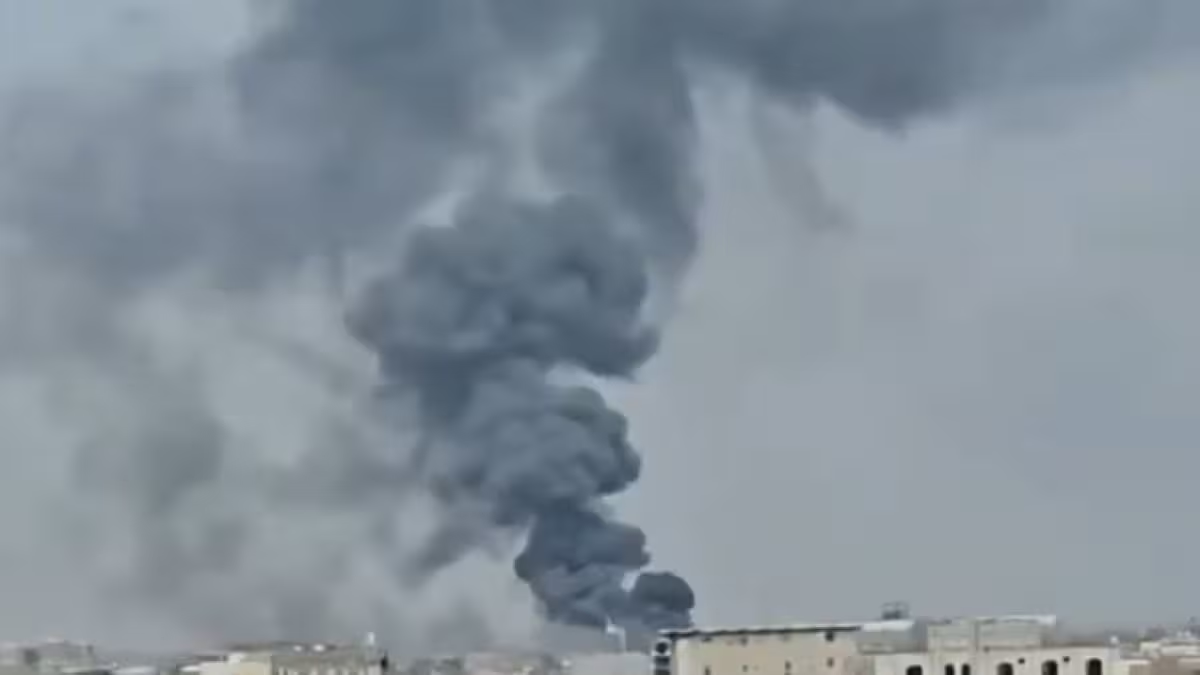
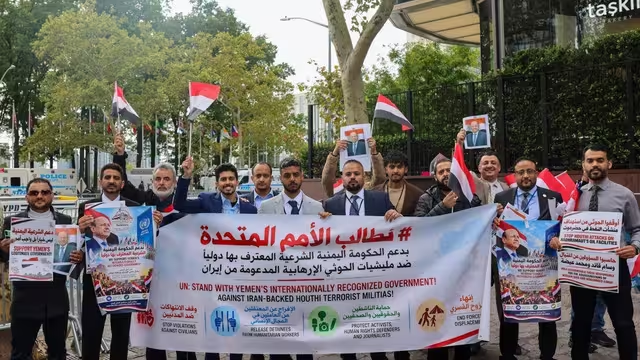
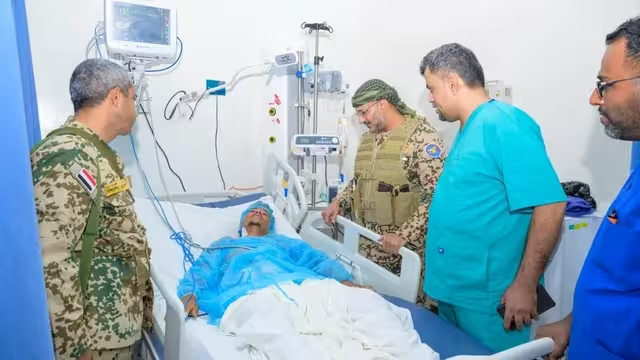
The Yemeni government condemned in the strongest terms what it described as the "terrorist attack" launched by the Houthi militia, backed by the Iranian regime, on the port of Mokha in Taiz governorate, southwestern Yemen, using drones and missiles.
It described the attack as a "blatant assault on a vital civilian and economic facility," which once again exposes the militia's criminal nature and its disregard for the lives, interests, and national resources of Yemenis.
A cabinet statement considered the assault part of a systematic approach by the Houthi militia to target ports, vital facilities, infrastructure, and economic sectors, even as it continues to peddle false claims about its so-called "siege" on the Yemeni people.
It said: "The paradox that can no longer be ignored is that the very militia claiming a siege is the same one targeting Yemen's ports, striking its vital facilities, attacking its infrastructure, plundering its national resources, disrupting commercial and economic activity, and cutting off lifelines for millions of Yemenis—confirming that the people's suffering is merely a tool for the militia's propaganda and political blackmail."
The government stressed that targeting Mokha port and vital installations constitutes a war on the state, society, and the national economy, and falls within an Iranian-backed project to keep Yemen in a cycle of chaos and destruction, using its lands, ports, and maritime corridors to threaten regional and international security.
It warned that the targeting of Mokha represents a highly dangerous escalation, affirming that the Houthi threat is no longer confined within Yemen but has become a direct danger to regional and international security, stability, and freedom of navigation and trade in the Red Sea.
The government held the Houthi militia fully responsible for this assault and its repercussions, while also holding the Iranian regime accountable for continuing to supply it with weapons, expertise, and military technology enabling these attacks on civilian facilities, ports, and international shipping.
It affirmed that it would shoulder its full national and constitutional responsibilities in protecting vital facilities, ports, and national resources, and would not allow a terrorist militia or any external party to use Yemen's territory, institutions, and capabilities to harm its people or threaten regional security and international interests. It will continue taking all necessary measures to protect economic and service facilities and secure trade and supply movements, in coordination with regional and international partners.
The government renewed its affirmation that Yemen will not be a permanent platform for the Iranian project to threaten the region and the world, calling on the international community to move beyond statements of condemnation and concern toward a practical and deterrent stance against the Houthi militia and its backers—drying up its funding and arming sources, holding it accountable for targeting civilian facilities and ports, and threatening international navigation.
It stressed that the path to peace in Yemen does not pass through rewarding terrorism or tolerating armed militias, but through ending the causes of escalation, enabling legitimate state institutions to extend their control over the entire national territory, and restoring the state's monopoly on weaponry—thus ensuring Yemen's security and stability and protecting its interests, those of the region, the international community, and freedom of navigation in the Red Sea.