Yemen National Resistance Spokesman Reveals What Happened in Western Coast Battles
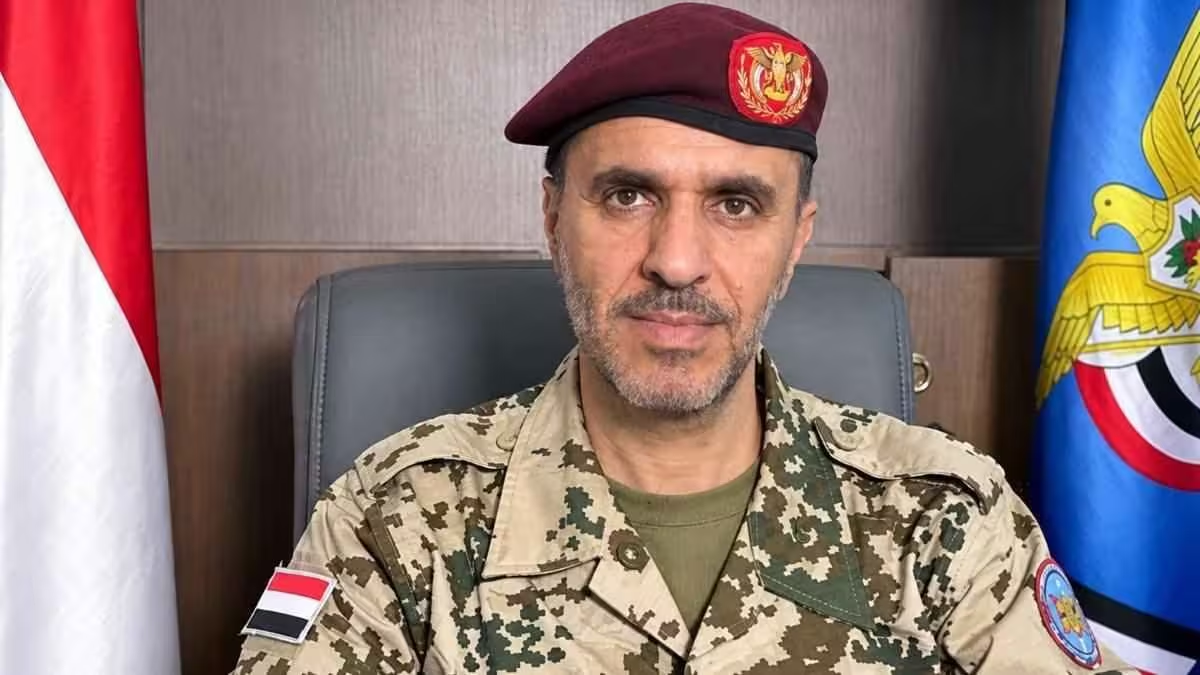
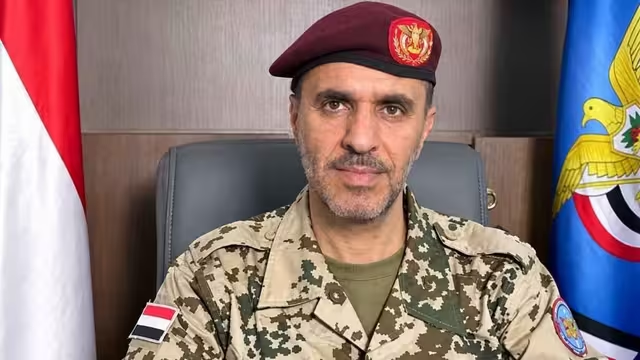
Brigadier General Sadiq Douid, the official spokesman for the National Resistance Forces in Yemen, revealed details from the fierce battles witnessed in the western coast areas of Taiz and Hodeidah governorates in western Yemen, and the dramatic transformations they saw in recent weeks.
In his first statement, following the military retreat of government forces days ago, Douid said: “The operations that took place on the western coast were planned and prepared months ago, and were carried out by direct order from the Iranian Revolutionary Guard Corps, with direct participation of Iranian and Lebanese experts in managing them, as part of Iran’s war. Tens of thousands were mobilized for it and it was equipped with large weapons and equipment, and its inevitable objective was to control Bab al-Mandab.”
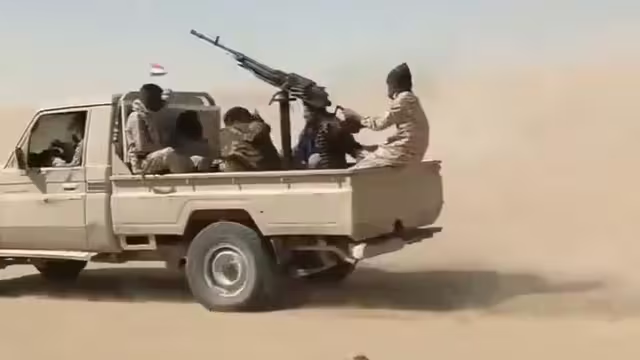
He added: “The National Resistance defended a front stretching 170 kilometers, in addition to protecting the coasts and islands. From 9 August to 9 September, 130 ballistic missiles, 145 suicide drones, and 15 booby-trapped boats were launched, including 23 missiles and 18 drones used to target Lieutenant General Tariq Saleh himself at the command and residence headquarters, as well as targeting other headquarters where the militia expected the commander to be.” He continued that “for the first time in the history of wars, ballistic missiles were fired at the frontlines onto positions and trenches.”
He said: “Through the electronic warfare unit, we monitored 5,346 wireless communication devices near the frontlines, including 3,181 on the Al-Barh front and 2,165 on the Hodeidah front. One device is used by the leaders of factions or groups whose members range between 10 and 30 fighters, and the human mobilization exceeded seventy-six thousand fighters.”
He added: “The intensity of enemy fire reached its peak, as one defensive position was targeted before being stormed with 85 mortar shells, a figure that exceeds tactical rates many times over.”
Douid also revealed that “dozens of missiles and suicide drones were fired at our forces during the withdrawal, and the firing is still continuing to this day, with the aim of preventing regrouping and reorganization.”
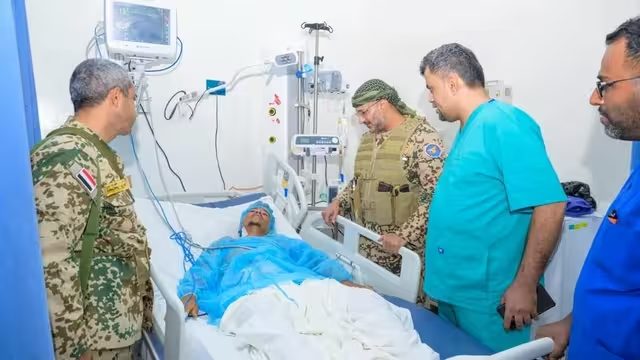
He said that “during these confrontations, the valleys and mountains were filled with the enemy’s dead, and hospitals in areas under its control were overwhelmed with its dead and wounded.
The number of our martyrs and wounded exceeded 2,000, and we are still counting the numbers to this day. That is, we were losing hundreds of our fighters daily, between martyrs and wounded, figures that, as military professionals know, occur only in major battles.”
He continued: “The National Resistance formed an obstacle to the Iranian-Houthi project in the Red Sea, and an important link in the republican ranks. We fought and sacrificed precious blood in defense of ourselves, the liberated areas, and our Yemeni republic, and we were a bulwark for the region and the world. We did what we had to do, and what national responsibility imposed on us.”
He concluded by saying: “In this battle, we needed to move the fronts with sincerity and strength to break the Houthis and Khamenei’s project. Victory is tied to sincerity with God and the homeland, solidarity among those of the same project, and addressing the imbalances of the previous stage. We lost a round, but our will will not be broken, and we remain determined to continue fighting. With the cooperation of Yemen’s free people, the theocracy serving Iran will be defeated, God willing.”