Examination of Houthi Missile Debris in Mokha Reveals Iranian Fateh-110 Origin
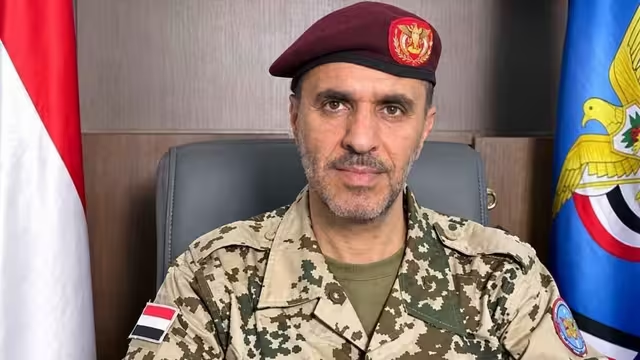
Brigadier General Sadeq Duwaid, spokesman for the National Resistance Forces in Yemen, announced that the examination of ballistic missile debris launched by Houthi militias toward the city of Mokha has uncovered their Iranian provenance.
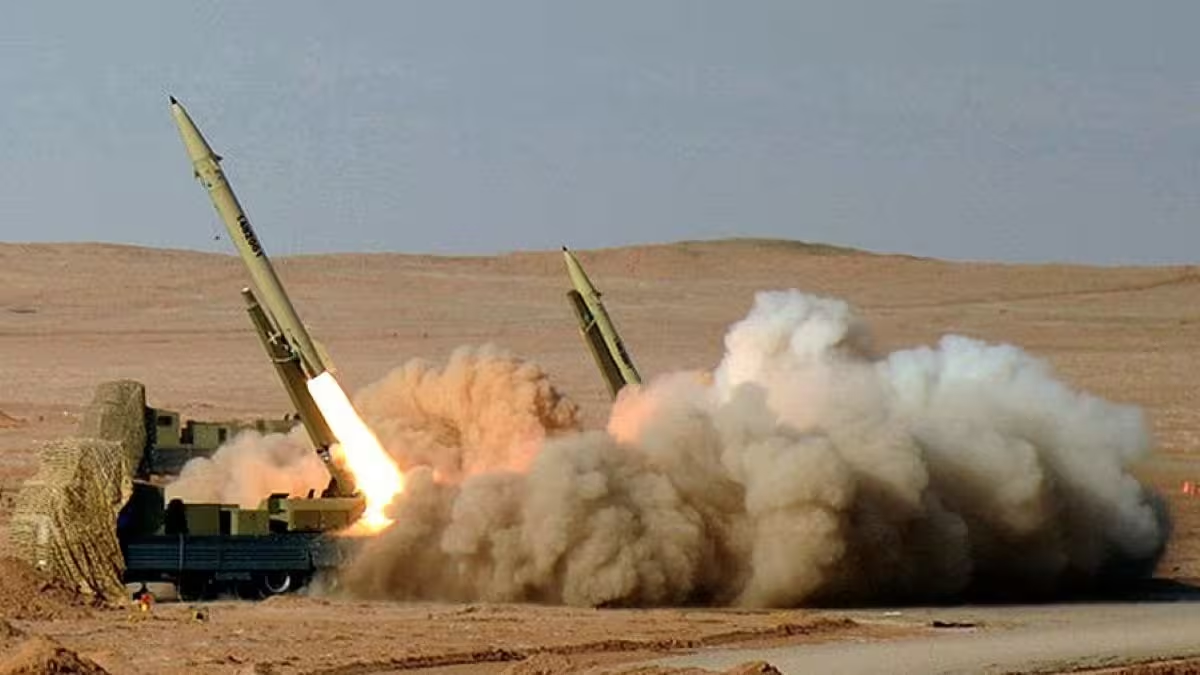
In tweets posted on his account, Duwaid elaborated: "Through examining the debris of some missiles used by the Houthis – Iran's arm – to target Mokha port and several areas along the western coast, it has become evident that they belong to the Iranian-made Fateh-110 ballistic missile family, which has a range of up to 300 kilometers and operates on solid fuel. Iran has supplied these weapons to its tools of evil under various designations, and they are launched from mobile platforms or camouflaged commercial trucks."
Earlier, Duwaid had disclosed the tally of Houthi attacks directed at Mokha city up to August 14, stating that 40 ballistic missiles, 46 drones, in addition to explosive-laden boats, were launched by the terrorist Houthis within just a few days, targeting the port of Mokha and civilian properties that provide essential services to the local population.
He stated: "After failing to achieve their military objectives and suffering heavy losses on the frontlines as a result of our forces' strikes, they resorted to exacting revenge on civilian infrastructure."
The Iranian "Fateh-110" Missile
According to published information reviewed by Nashwan News online, the Fateh-110 belongs to the short-range, surface-to-surface ballistic missile category and is manufactured by Iran's Aerospace Industries Organization. Its technical specifications include: a length of 8.86 meters, a diameter of 0.61 meters, a total weight of 3,450 kilograms, and a warhead weighing approximately 500 kilograms. It runs on solid fuel, achieves an effective range of 300 kilometers, and delivers an accuracy of up to 10 meters. The missile is launched from mobile platforms or camouflaged commercial trucks, granting it significant maneuverability and concealment capabilities.
The first generation of the missile entered service in 2002 with a range of 200 kilometers, followed by successive upgraded generations that extended the range to 250 kilometers (2004) and then 300 kilometers (2010), while the fourth generation (2012) focused on enhancing precision. The missile is used by Iran and its allies, including Hezbollah in Lebanon and Syrian forces, with Hezbollah having recently revealed that it possesses precise copies of it.