Yemen’s UNESCO Ambassador Warns of Houthi Threat to Old Sana’a
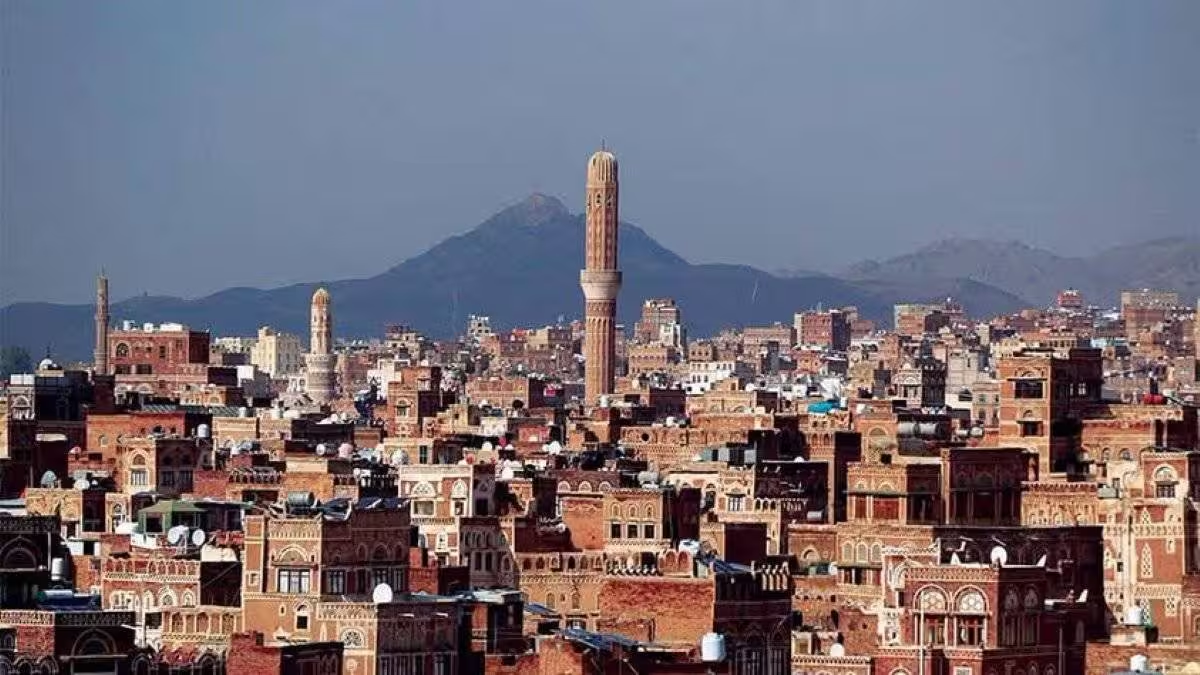
Yemen’s ambassador to UNESCO, Dr. Mohammed al-Jumaih, has warned of what he described as a “dangerous Houthi plan threatening the future of Old Sana’a,” involving, among other measures, altering the city’s identity and demolishing buildings that form part of its UNESCO World Heritage Site, one of the world’s most beautiful and historically significant cities.
Situated in a mountain valley at an elevation of 2,200 metres, Old Sana’a has been inhabited for more than 2,500 years. UNESCO describes the city as an exceptional architectural ensemble, renowned for its distinctive multi-storey tower houses built from rammed earth and fired brick, decorated with geometric patterns of brick and white gypsum. Its skyline is punctuated by minarets, while gardens, mosques, bathhouses and caravanserais are woven into its dense urban fabric. The city’s 103 mosques, 14 hammams and more than 6,000 houses reflect its long religious, political and architectural history. Sana’a was inscribed on the UNESCO World Heritage List in 1986 and has been on the List of World Heritage in Danger since 2015.
In an article obtained by Nashwan News, al-Jumaih said the plan comes after previous Houthi schemes to demolish four historic markets in Old Sana’a to build what was called “Imam Ali Square,” as well as an attempt to establish unauthorized recreational spaces inside the Old City and introduce a new “Shu’ub Gate.” He also pointed to the use of cement and modern building materials in some of Old Sana’a’s structures, describing these developments as part of an unrelenting campaign targeting the city’s heritage.
He added that, “in another step in a series of measures aimed at altering the features of Old Sana’a,” the Houthi-affiliated Endowments Authority is seeking to introduce major changes to the city. This comes after the authority sold the al-Mashhad cemetery and leased the garden of al-Basha Mosque to some merchants to construct a modern building that violates the city’s traditional architectural style.
“The most dangerous aspect of the plan,” he continued, “is the one being pursued by the Houthi Endowments Authority to demolish a large number of buildings and annexes surrounding the Great Mosque in Sana’a, in order to build a religious university on the site of those buildings, which are included in the UNESCO World Heritage List.”
Al-Jumaih said that “Old Sana’a is a World Heritage Site belonging to all humanity, and the only body authorized to approve any works or interventions within the city is UNESCO, in accordance with the conventions signed by the Republic of Yemen.”
He therefore described the sale of the cemetery, the leasing of the mosque garden, and the demolition of buildings surrounding the Great Mosque as “a blatant assault on Yemen’s history and the global heritage of Old Sana’a,” which is already classified as a World Heritage Site in Danger.
“There is no doubt that this Houthi move will lead to Sana’a losing its Outstanding Universal Value, on the basis of which the Old City was designated a World Heritage Site,” he added.
“UNESCO has a responsibility to exert pressure to stop this reckless destruction. The city’s residents must stand united against the greed of the Houthi Endowments Authority. Media outlets, writers, and all those who cherish Sana’a around the world are called upon to reject this step, through which the Houthis seek to sell our heritage to investors and merchants.”
Al-Jumaih also noted that Yemen’s Permanent Mission to UNESCO had sent an official letter to the organization informing it of the plan, warning that its implementation could put Sana’a at risk of being permanently removed from the World Heritage List.